
The Truth About Hosting Pesach No One Says Out Loud
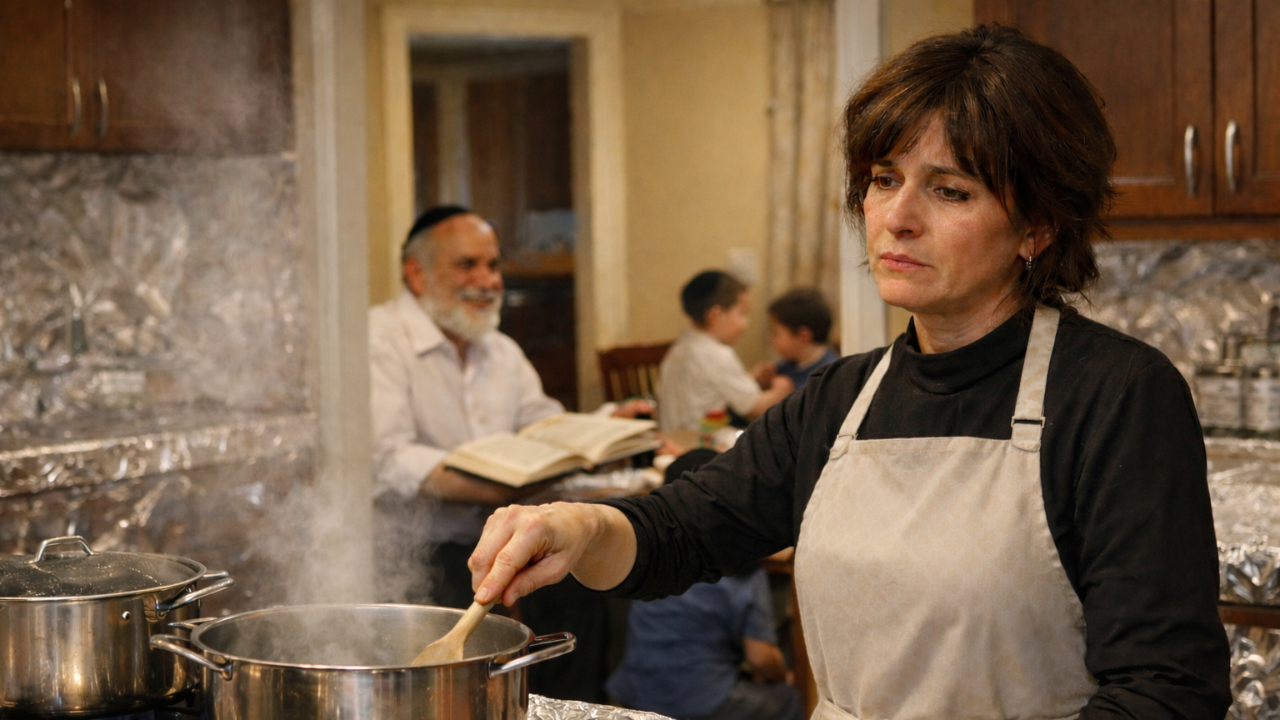
Racheli’s shaitel was slightly crooked.
Her legs ached in that deep, dull way that comes from standing too long.
Racheli stood in front of the pot and had a thought she didn’t want to admit.
If one more person asks me for something, I might cry.
A pot hissed as it boiled over.
From the living room came the crash of something falling and children shrieking with laughter.
Her husband leaned in the doorway, watching it all with a wide smile.
“Relax and enjoy,” he said warmly.
Racheli looked at him.
Then she looked at the overflowing sink.
And she wondered if he was living in the same house.
Relax?
Pesach had only just begun.
Everyone said hosting married children for Pesach was pure nachas.
So why did Racheli feel like crying in the kitchen?
For weeks before Yom Tov, she had been preparing.
She wanted everything to feel warm and welcoming when her married children came home.
And now the house was full.
Full of laughter.
Full of noise.
And full of work.
She added salt as her daughter floated in serenely.
“Ma, do you have any more of the chocolate cake?”
“In the freezer,” Racheli answered, still stirring.
A few minutes later, her daughter-in-law, Gitty, rushed into the kitchen holding a screaming baby.
“Ma! Do you know where Moishy’s paci is? He won’t stop crying!”
Racheli’s heart raced as the baby’s cries filled the kitchen.
“Second drawer in the blue room,” she said.
Gitty hurried out again.
The pot kept bubbling.
The spoon kept moving.
Then her daughter, Zissy, appeared in the kitchen doorway, a little tentative.
“Ma…” she said softly.
Racheli turned from the stove.
Zissy shifted her weight, clearly feeling bad to ask.
Racheli already knew what was coming.
“Do you mind if I lie down for a couple minutes? I barely slept last night. Zevi was coughing all night.”
She added quickly, trying to reassure her:
“The big kids will watch the little ones. You really don’t need to do anything.”
Racheli nodded automatically.
“Of course,” she said.
But she knew exactly what that meant.
When the big kids watched the little ones, it lasted a couple of minutes until they started reading a book or playing a game…
And then the toddler was halfway out the back door.
Racheli wiped her hands and walked into the dining room with a broom. Crumbs were scattered everywhere.
Her husband sat there watching the grandchildren play.
His face was glowing.
“Isn’t this beautiful?” he said. “All the kids together.”
“It is, Baruch HaShem,” she said quietly, sweeping.
Then he added, almost casually, “Come sit down a little. Enjoy it.”
Racheli lowered herself heavily into the chair across from him. “I’m exhausted.”
He nodded sympathetically.
“I know it’s a lot. But look around. This is the nachas we dreamed about.”
Racheli sighed. “I just wish someone would notice how much work it is.”
He looked surprised. “Of course we appreciate it.”
And the truth was…he meant it.
And yet she still felt invisible.
And by the third day she was snapping at everyone, including her husband.
That’s the tricky thing about resentment.
Sometimes it grows not because people are ungrateful…
But because we’ve taken on more than we can carry.
A woman who never rests eventually starts to resent the people she loves most.
When Racheli and I met, we strategized a small shift so this year would be different.
Instead of pushing herself past the breaking point, she started practicing self-care.
She rested while the kids went on a Chol HaMoed outing.
She sat at the table talking instead of jumping up to clean.
One afternoon she slipped outside for a short walk. The sun felt warm. The air felt quiet. And for the first time all day… she breathed.
And something surprising happened...she enjoyed Yom Tov again.
She laughed more.
She enjoyed the grandchildren more.
And the tension in the house lifted.
The house wasn’t any less full.
But her heart felt lighter.
Her husband noticed the difference.
“You seem happier today,” he said.
Racheli shrugged a little. “I went for a walk. It's really nice out.”
He smiled at her. “That’s good. You deserve that.”
And suddenly the house didn’t feel like a hotel anymore.
It felt like a home again.
Self-care isn’t selfish.
It’s what allows a woman to give from a full heart instead of an empty one.
Sometimes the biggest shift in a family doesn’t come from changing everyone else.
It comes from caring for yourself with the same kindness you give everyone else.
If you’re reading this and thinking, “Yes… this is exactly how I always feel on Pesach…”
You don’t have to carry it alone.
I would love to support you.
Schedule a free call with me here
Sometimes one small shift can help a woman enjoy the very nachas she worked so hard to create.
And sometimes that shift begins with a simple conversation.
If you're ready to feel connected, seen, and cherished again, you don’t have to figure this out alone.
Stay connected with blog updates!
Join our mailing list to receive the latest blog posts.
Don't worry, your information will not be shared.