
Nobody Talks About the Wife Who Is Exhausted on Shavuos
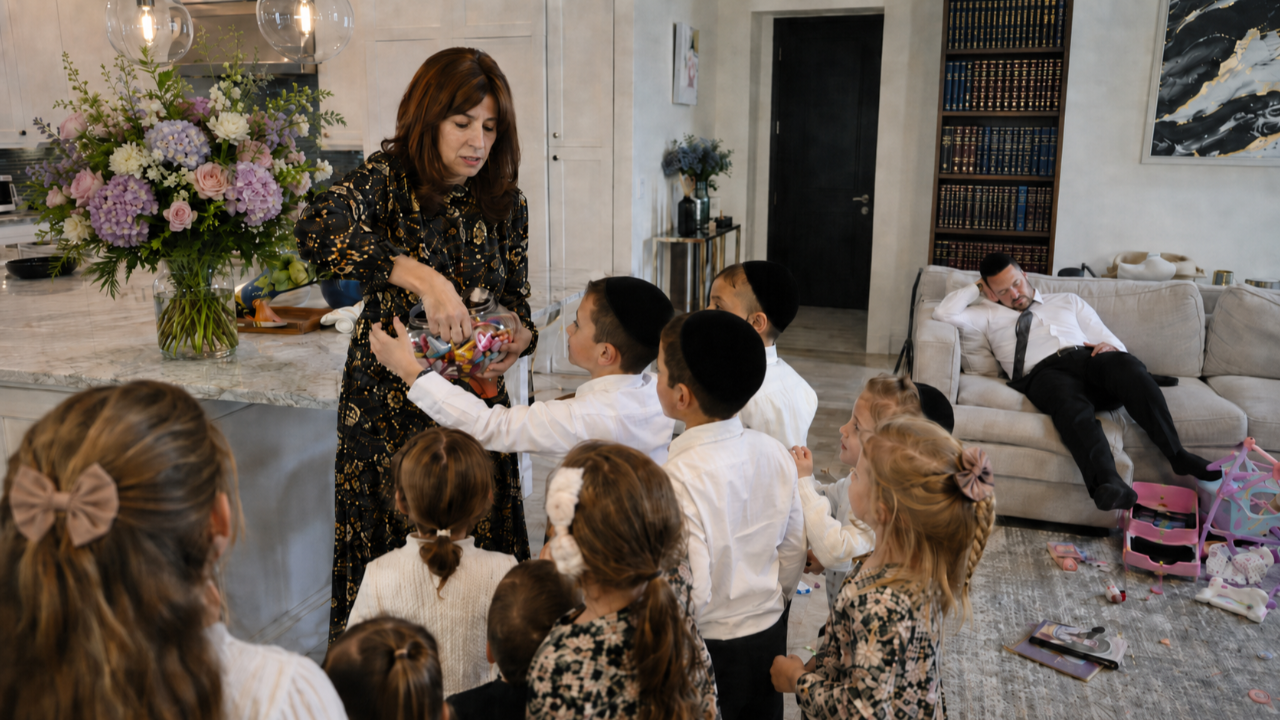
By 10:17 a.m. on Shavuos morning, Malky was already done.
She had been up at 1:40 with the baby.
Again at 3:15 because Nosson needed water.
Again at 4:30 because Shevy was crying that her blanket fell off.
And then at 6:05 a.m., the house was awake. The boys were fighting over a Magna-Tiles tower. Her eight-year-old kept asking if they could have cheesecake “now.”
And her husband? He was sleeping. Of course, he was sleeping. He had stayed up all night learning.
And Malky appreciated and admired that tremendously. She wouldn't want it any other way. She really did respect her husband and was so proud of him and his learning. And she really aspired to be the kind of wife who smiled warmly and said, “You must be exhausted. Go rest.”
But inside, something was boiling. Because he had stayed up one night. She was up half the night almost every night.
And somehow, his exhaustion got a full day of recovery. Hers got breakfast dishes, sticky floors, overtired kids, a baby on her hip, and a very, very long Yom Tov day stretching ahead of her.
By lunch, she was snapping.
“Stop fighting!”
“Stop sitting on the baby!”
“No, we are not having more ice cream.”
Her oldest daughter, Yaffa, looked at her and said quietly, “Mommy, are you mad at Tatty?”
That sentence hit her harder than she expected. Because yes, she was mad. Not because he learned. Not because he was tired. Because she felt invisible.
She felt like his exhaustion was holy and hers was just expected.
When Malky came to our coaching call, she said, “I know I’m not supposed to be resentful. But I am. I feel like I’m drowning, and everyone just assumes I’ll figure it out.”
And that was where we started. Not with blaming him or pretending she wasn’t tired. Not with telling herself, “It’s Yom Tov, I should be happy.”
We started with one simple truth: Malky had desires.
She wanted rest. She wanted help. She wanted to feel considered. She wanted to get through Shavuos without turning into a sharp, resentful version of herself.
And wanting those things did not make her selfish. It made her human.
So instead of waiting until she was boiling and then exploding, she practiced expressing a desire.
Not a complaint. Not a lecture. Not, “You always get to sleep, and I never do.” Not, “Must be nice to sleep all day while I do everything.”
Just: “I would love to take a nap after the seuda.”
That was it. Final outcome only. No instructions. No guilt. No attack.
And something shifted in her. Because even before he responded, she had stopped abandoning herself. She had stopped pretending she was fine. She had stopped waiting for him to magically notice what she needed while silently collecting evidence that he did not care.
After lunch, her husband took the kids outside for a little while, and Malky lay down.
Not for three hours. Not even for one. But for twenty quiet minutes with the door closed and her eyes shut.
When she got up, the kitchen was still a mess. The kids still asked for snacks approximately every four seconds.
But Malky had done something different. She had honored her own desire before resentment swallowed her whole.
When her husband walked back in with the children, one kid was crying because he lost his nosh. Another had grass stains on his white Yom Tov pants. The baby needed a change.
And her husband said, “I think I’m going to learn for a little bit.”
In the past, that sentence would have lit a fire in her chest. Of course you are. Of course, you get to leave again. Of course, I’m the one still here.
She could feel the old speech rising. But this time, she paused and checked in with herself. What do I need right now?
And then she said, “I hear you. I would love help getting them settled first.”
No lecture. No sarcasm. No courtroom case about who slept and who didn’t. Just a simple desire.
He looked at the kids, then back at her, and said, “Okay. I’ll change the baby and get the boys washed up a bit.”
It was not a perfect movie scene. But inside, Malky felt different. She was no longer silently furious, waiting for him to notice how much she was carrying.
She had spoken up. She had honored her desire. She had chosen calm before resentment took over.
And in the middle of a very long Yom Tov day, Malky got herself back.
By the second day, she was different. Not because her husband suddenly became available the whole day. Not because the children became magically calm.
Because she stopped trying to be endlessly strong while quietly resenting her husband for just doing his thing.
She made one small plan for herself. A slice of kokosh cake and coffee. Plastic plates without guilt. Visiting a neighbor. A few perakim of Tehillim.
And when her husband was unavailable, she did not turn it into a whole painful story about how alone she was in the marriage. She asked herself, what do I need? That is where her power was.
Sometimes the hardest part of Yom Tov is not the cooking or the hosting. It is the feeling that everyone else’s needs are legitimate, and yours are optional.
But your exhaustion matters. Your desires matter. Your peace in the home matters too.
If you’re reading this and thinking, “Yes… this is exactly how I’ve been feeling,” you don’t have to keep figuring out how to get through long Yom Tov days feeling invisible and resentful alone.
You can schedule a free call with me here.
Let’s talk about how to honor your desires without turning your exhaustion into a fight.
If you're ready to feel connected, seen, and cherished again, you don’t have to figure this out alone.
Stay connected with blog updates!
Join our mailing list to receive the latest blog posts.
Don't worry, your information will not be shared.