
Nobody Talks About...Hatred at Home
“Seriously, Dovid?” Yael’s voice cut across the room. “Why would you tell Yitzy he could come to Eichah? It’s already way past his bedtime. You never think about how your decisions affect anyone but yourself.”
Dovid was crouched beside their seven-year-old near the front door, helping him find his other floafer.
“Because he asked to come,” Dovid responded. “I think it will be meaningful for him.”
“He’ll be exhausted tomorrow, and I’ll be the one dealing with him while I’m fasting,” Yael shot back, resentment sharpening her words.
Dovid’s jaw tightened. “I said I’ll take care of him.”
Yael gave a short laugh. “Right. Like you always do.”
Dovid glanced at Yitzy, then back at her. Yitzy went still beside him. “Can we please not do this in front of him?” he said, his voice low and tense.
Yael crossed her arms, too angry to back down. “If you thought things through before making decisions, we wouldn’t have to.”
Dovid’s face closed. He stood, handed Yitzy his missing shoe, and opened the door.
“Come on,” he said quietly. “We’re going to be late.”
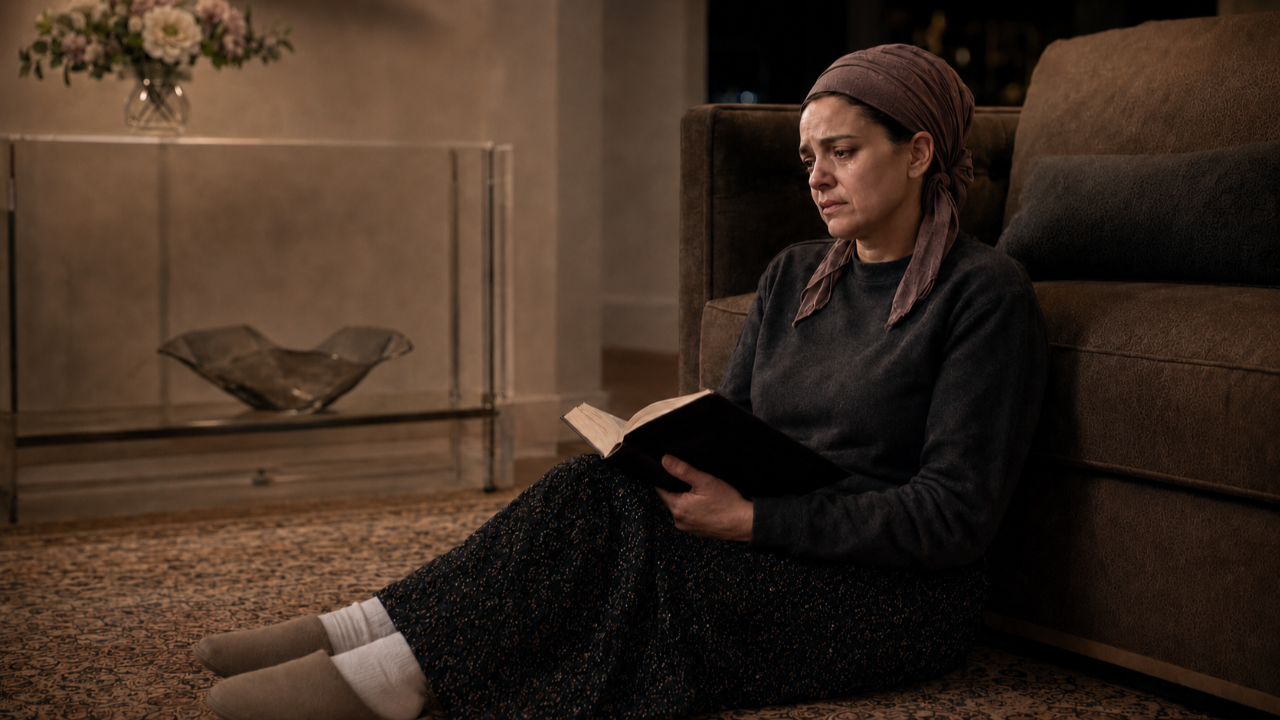
After they left, Yael lowered herself onto the floor beside the couch. One dim lamp cast a pale circle across the carpet.
But the words she had thrown at Dovid were about more than tomorrow. They carried years of accumulated evidence: He didn't think about her needs. His judgment could not be trusted.
Another ordinary difference had become another verdict on who he was.
She and Dovid fought about the children, money, schedules, his tone, her reactions, who had forgotten what, and who had started it.
The words sinas chinam frightened her. Because if she was honest, sometimes it felt as though she did hate Dovid. The admission made her stomach twist. This was her husband, the man she had once dreamed of building a life with. She knew she should love him. But some days, the anger was so thick she could no longer feel the love underneath it.
Sitting on the floor that night, she wondered whether baseless hatred could begin with the habit of assuming the worst intentions behind every action of the person closest to her.
Nobody talks about the private grief of wondering what is happening to the Mikdash Me’at inside her own walls.
Yael was heartbroken because this was not the marriage she had imagined.
She wanted to feel like Dovid’s partner, not his opponent. She wanted their children to grow up watching two people who honored each other, even when they disagreed.
When the front door opened later, Yitzy came in beside his father, tired but animated.
“Tatty, I liked when they turned off all the lights,” he whispered.
Dovid rested a hand on his son’s shoulder. “I’m glad you came with me.”
As Yael watched Dovid lead him upstairs, another possibility entered the room.
Maybe taking Yitzy had not been careless. Maybe Dovid had wanted to give their son a meaningful memory of Tisha B’Av.
Her concern about tomorrow had not disappeared. But for the first time, she could see that his decision might have come from care, not thoughtlessness.
That realization brought her back to something we had discussed in coaching: apologizing for being disrespectful when she criticized him.
At the time, the idea had felt impossible, unfair, almost ridiculous. Why should she apologize when she was the one who felt hurt and disregarded? Why should she be the one to go first? She had listened, but she could not imagine ever saying the words.
Tonight, though, the idea landed differently. Sitting on the floor on Tisha B’Av, mourning the destruction of the Beis Hamikdash while feeling the painful distance in her own marriage, she could see what their cycle was destroying.
The apology still didn't feel fair. But for the first time, proving what was fair felt less urgent than stopping the fire.
She could keep waiting for restoring respect to feel easy, or she could begin here, tonight.
It felt like now or never.
When Dovid came back downstairs, he stopped at the entrance to the living room, where Yael still sat on the floor. Her heart pounded as she looked up at him.
“Dovid,” Yael said. “I apologize for being disrespectful when I criticized you and spoke as though you don’t think or care.”
Dovid stared at her. For several long seconds, he said nothing. Yael’s heart pounded harder as the apology hung between them.
Then he exhaled. The tension in his jaw loosened, and his shoulders slowly dropped.
“Thank you,” he said, his voice softer than it had been all evening. “That means a lot.”
After a moment, he lowered himself onto the floor several feet away from her.
“I know it's hard when you’re fasting,” he said. “I’ll help take care of the kids.”
Yael’s apology did not erase years of hurt, and it did not guarantee how Dovid would respond the next time they disagreed. But it revealed a possibility she had not been able to see before: she could have a real concern without turning her husband into the enemy or stripping him of his dignity.
One apology, however, could not undo a pattern that had become automatic. Her tone, corrections, and assumptions surfaced before she even noticed them. With support, Yael began learning to catch those moments sooner and choose respect.
Not blind agreement or silence, but speaking without contempt and remembering that a different opinion did not make Dovid her enemy.
Her mikdash me’at was not hopeless. It was a home in pain.
And perhaps healing would begin each time she chose not to feed the fire. There is nothing that brings the rebuilding of the Beis Hamikdash closer than creating peace and respect in our own homes.
If you recognize the painful cycle of feeling more like opponents than partners, you can book a free marriage breakthrough call with me here.
Let’s talk about how to step out of criticism and scorekeeping without silencing yourself, and begin restoring connection in your home.
If you're ready to feel connected, seen, and cherished again, you don’t have to figure this out alone.
Stay connected with blog updates!
Join our mailing list to receive the latest blog posts.
Don't worry, your information will not be shared.